

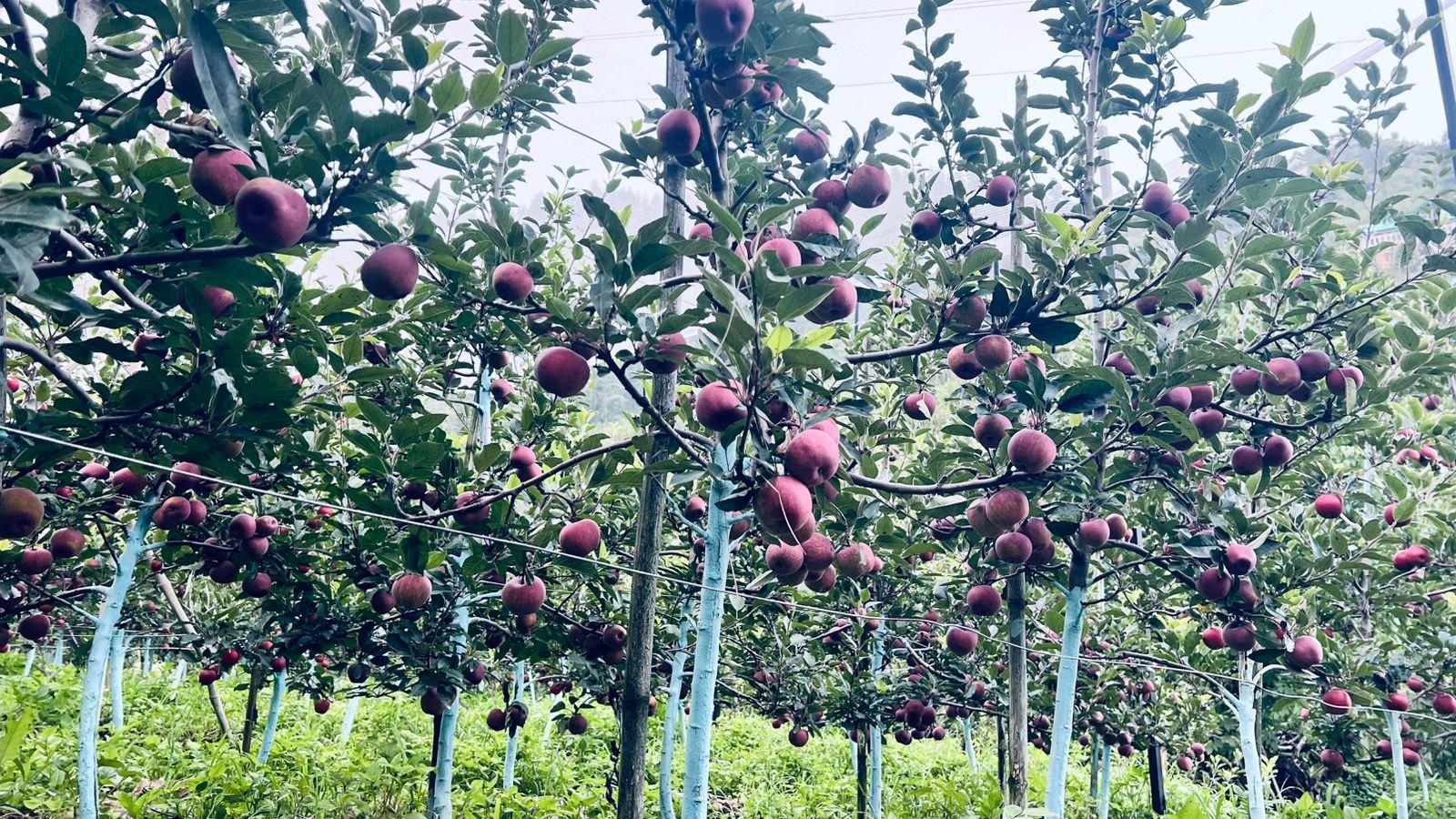
What actually happens when you stop spraying: two failed crops, a scab outbreak that took half the Royal Delicious, and the season everything turned.
My father sprayed on a calendar. Not because he was careless — because that is what the extension officer taught in 1978, and it worked for thirty years. When we stopped, the orchard did not thank us. It punished us for two seasons.
Year one: the optimism
The first year was almost encouraging. Yield fell about a fifth, which we had budgeted for, and the fruit tasted better than anything we had grown. We told everyone who would listen.
Year two: scab
Then came a wet April. Venturia inaequalis does not care about intentions. We lost roughly half the Royal Delicious block and most of the fruit that survived was unsellable to the mandi, though perfectly good to eat and to press.
An orchard is not a garden. It has a memory, and it takes three years to change its mind.
What changed in year three
Three things, none of them dramatic. We opened the canopy properly so leaves dry by mid-morning. We started composting the leaf litter instead of leaving it as an inoculum. And we accepted a permanent yield ceiling about fifteen per cent below where we were, in exchange for fruit we can sell direct at nearly twice the price.
Harvest runs from the second week of September. Anyone staying that fortnight is welcome in the rows at six in the morning, which is when it is worth being there.
What organic costs
More labour, more attention, and the loss of the ability to fix a problem in an afternoon. What it buys is a cellar full of cider we did not plan to make, soil that holds water through May, and the fact that children walk through the rows and eat straight off the tree.
Blossom in April, fruit in September, cider in December — and a photograph every time we prune it.
Has pruned these rows for thirty-one years. Knows every tree by its habit, not its number.

1 comment
We were there during harvest last September. The six a.m. start is not a gimmick — the light and the smell are the whole point.